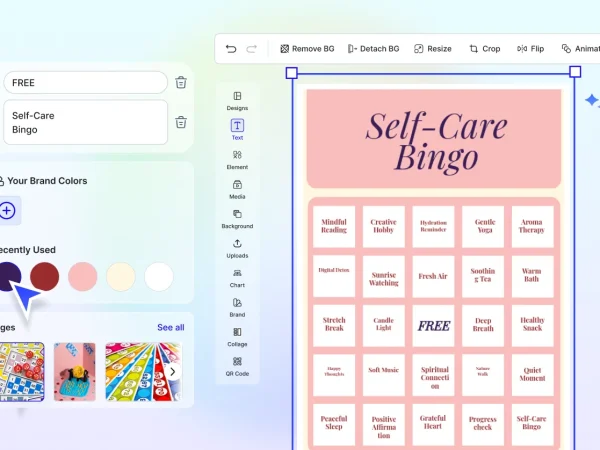
Let’s be honest. The phrase “mandatory training” can induce a collective groan in any office. And team-building? Well, it often conjures images of awkward icebreakers and forced trust falls. But what if you could inject a dose of genuine, lighthearted fun—the kind that actually sticks? That’s where the surprising power of integrating bingo mechanics into corporate training comes in.
It’s not about gambling or shouting “house!” in the middle of a budget review. It’s about leveraging the core psychological hooks of a classic game: clear goals, recognition, and a touch of friendly competition. Here’s the deal: by framing learning and collaboration within a familiar, playful structure, you can dramatically boost engagement, retention, and even camaraderie.
Why Bingo? The Psychology of Play at Work
Think about the last time you played a simple game. Your focus was laser-sharp, right? You were actively scanning, making connections, and celebrating small wins. That state of focused engagement—often called “flow”—is exactly what we want in a learning environment. Bingo mechanics, honestly, are a shortcut to that state.
The magic lies in a few key elements:
- Clear Objectives: A bingo card presents a concrete set of tasks or knowledge points. It cuts through ambiguity.
- Progressive Completion: The satisfaction of marking off squares provides a steady drip of dopamine—the brain’s “reward” chemical. This motivates continued participation.
- Variable Rewards: You never know which square you’ll complete next, or who will win. That unpredictability is weirdly compelling.
- Social Proof: Seeing colleagues mark squares creates positive peer pressure and a shared mission.
In short, it transforms passive content consumption into an active scavenger hunt for knowledge and behaviors.
Getting Practical: Bingo Formats for the Modern Workplace
Okay, so how do you actually do this? The beauty is in the adaptation. You can tailor the bingo framework to almost any corporate goal. Let’s dive into some concrete applications.
1. For Onboarding & Compliance Training
Instead of a dry handbook, new hires get a “Welcome Bingo” card. Squares might include: “Have a virtual coffee with someone from another department,” “Locate the cybersecurity policy on the intranet,” “Explain our core value of ‘Integrity’ in your own words,” or “Successfully submit your first expense report.”
It encourages exploration and social integration from day one. For annual compliance refreshers, a bingo card can cover spotting phishing attempts, quoting safety protocols, or identifying ethical dilemmas in short case studies. Suddenly, it’s a game, not a chore.
2. For Soft Skills & Meeting Culture
This is a goldmine. Create a “Meeting Bingo” card to promote better communication. Squares could be: “Someone actively builds on another’s idea,” “The meeting starts and ends on time,” “A concise, pre-read agenda was shared,” or “A silent participant is invited to share.”
It turns participants into mindful observers of group dynamics. For feedback training, squares might involve giving a piece of constructive feedback using the SBI model (Situation-Behavior-Impact) or asking a powerful, open-ended question.
3. For Hybrid & Remote Team Building
This is where bingo truly shines for team building with bingo mechanics. A “Connection Bingo” card can bridge physical distance. Squares get personal and fun: “Has a pet that makes a cameo on video calls,” “Can name three professional development goals of a teammate,” “Shares a weird but wonderful desk snack,” or “Volunteers to take notes without being asked.”
The goal isn’t just to win, but to spark conversations you’d never have in a formal setting. It builds what I like to call “ambient awareness”—that sense of being connected to your colleagues as whole people, not just email addresses.
Avoiding the Pitfalls: Design Tips for Success
Like any tool, bingo can backfire if implemented poorly. Here’s how to avoid common mistakes.
| Do: | Don’t: |
| Align squares directly with learning objectives or desired behaviors. | Create squares that are vague or irrelevant to the goal (“Says ‘synergy'”). |
| Mix challenge levels (some easy, some that require effort). | Make every square so difficult it feels demoralizing. |
| Focus on positive reinforcement and recognition. | Use it as a punitive surveillance tool. |
| Keep it fresh—rotate card designs for recurring programs. | Use the exact same card every quarter; it gets stale. |
| Debrief! Discuss what people learned while playing. | Just hand out the card and never speak of it again. |
The reward matters too. Skip the cash prize. Opt for experiences: a longer lunch break, choosing the next team outing, a charitable donation in their name, or even just public, genuine recognition in a team channel. The social win is often prize enough.
The Bigger Picture: It’s About Human Connection
At its core, integrating game mechanics like bingo isn’t a gimmick. It’s an acknowledgment that we’re all… well, human. We crave progress, recognition, and a sense of play. In a world of constant digital pings and fragmented attention, a simple bingo card can act as a focusing lens. It guides attention toward what truly matters—whether that’s a complex new software feature or the quiet colleague with a brilliant idea.
So, the next time you’re planning a training session or a team offsite, ask yourself: could this be a game? Could we use bingo for employee engagement in a way that feels authentic? You might just find that the path to a more skilled, more connected team isn’t through another lecture. It’s through a checked square, a shared laugh, and the simple, universal hope of calling out, “Bingo!”